Home › Hopscotch Play Guide › Squares
Squares
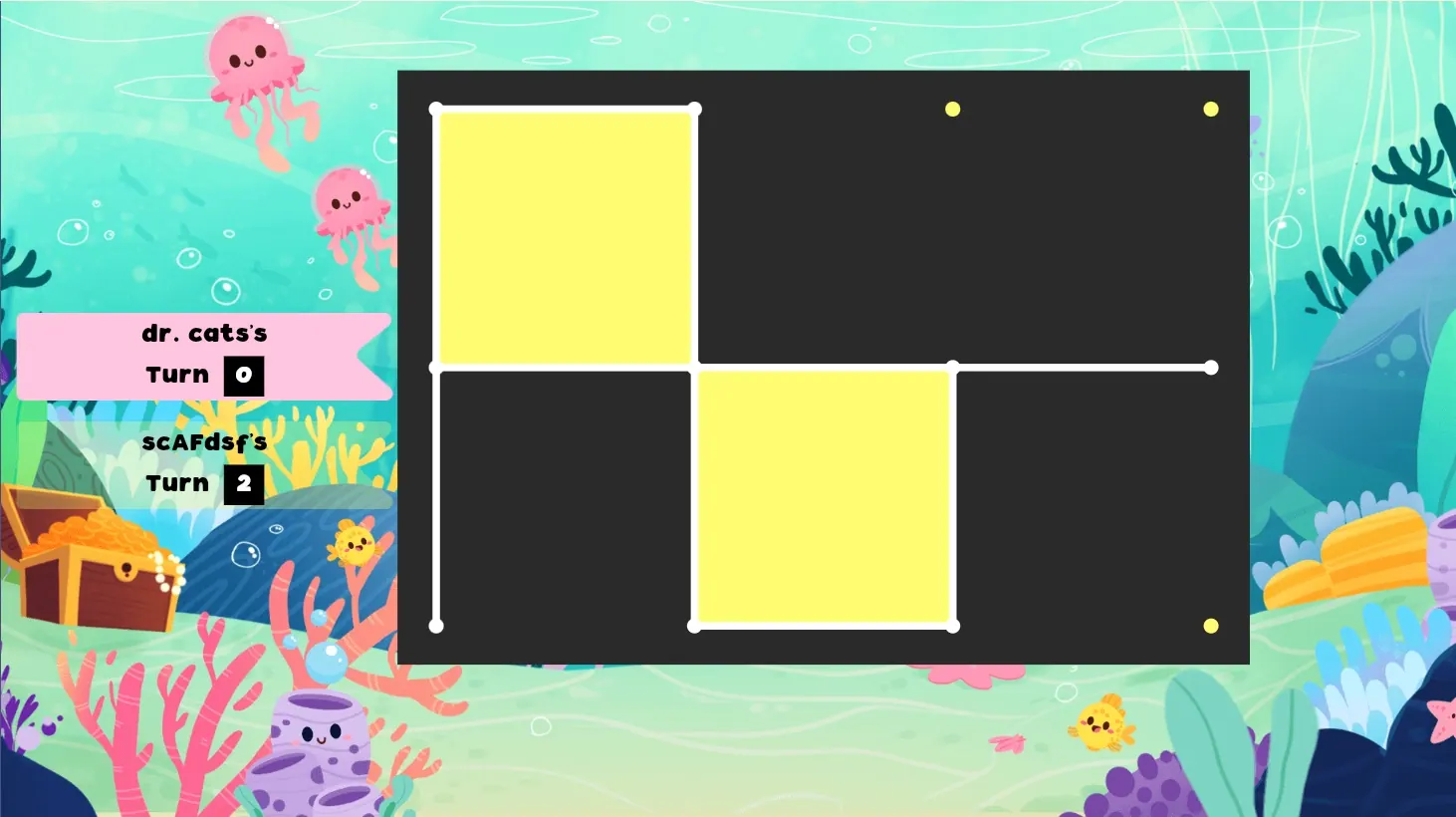
Squares is a twist on the classic dots-and-boxes game. Take turns connecting dots, close up squares to claim them, and watch for surprise prompts hidden along the way! Each prompt invites a little reflection on the topic you choose, so a simple strategy game becomes a natural way to start a conversation.
Kid and teen versions
Squares comes in two versions, one for kids and one for teens. Both play the same way, but each has its own look and its own set of age-appropriate prompt topics. Pick the version that fits your client.
Step 1: Set up your game
From the start menu, choose:
- Board size: A smaller board makes for a quick game, and a bigger board works well for a longer session.
- Theme: Pick the look you like best.
- Topic: Choose a prompt topic, like Self-Esteem, Anger, Family, Feelings, or Getting to Know You.
Just want to play? Choose Classic mode for the game with no prompts.
Step 2: Draw a line
On your turn, tap a dot and drag to a dot right next to it, either across or up and down, then let go to draw your line.
Step 3: Take turns
Players take turns drawing one line at a time. Watch out: every line you draw could set up a square for the other player!
Step 4: Complete a square
When you draw the fourth line around a square, that square is yours. Completing a square also earns you another turn, so keep going!
Step 5: Answer a surprise prompt
Some squares have a prompt hidden inside. When you complete one of these squares, a prompt related to your topic pops up, like:
- "Name something you like about yourself."
- "What helps you calm down when you're angry?"
- "Describe a fun memory with your family."
Answering is always optional. If you'd rather not answer, just take your next turn as usual.
Step 6: Win the game
The game ends when every square on the board has been claimed. The player with the most squares wins!
Tips for using Squares in session
- Match the board to your time. Choose a small board for a quick warm-up and a larger one when you have more time to talk.
- Pick a topic with a purpose. Choose a topic that connects to what you're working on, or start with Getting to Know You to build rapport.
- Keep answering optional. Letting clients pass on a prompt helps them feel safe, and they often come back to it later.
- Answer too. When you complete a prompt square, share your own answer to model openness.
- Talk strategy. Ask, "Why did you draw that line?" It's a great way to practice planning ahead and thinking about what the other player might do.