Home › Hopscotch Play Guide › Coping Skills Toolbox
Coping Skills Toolbox
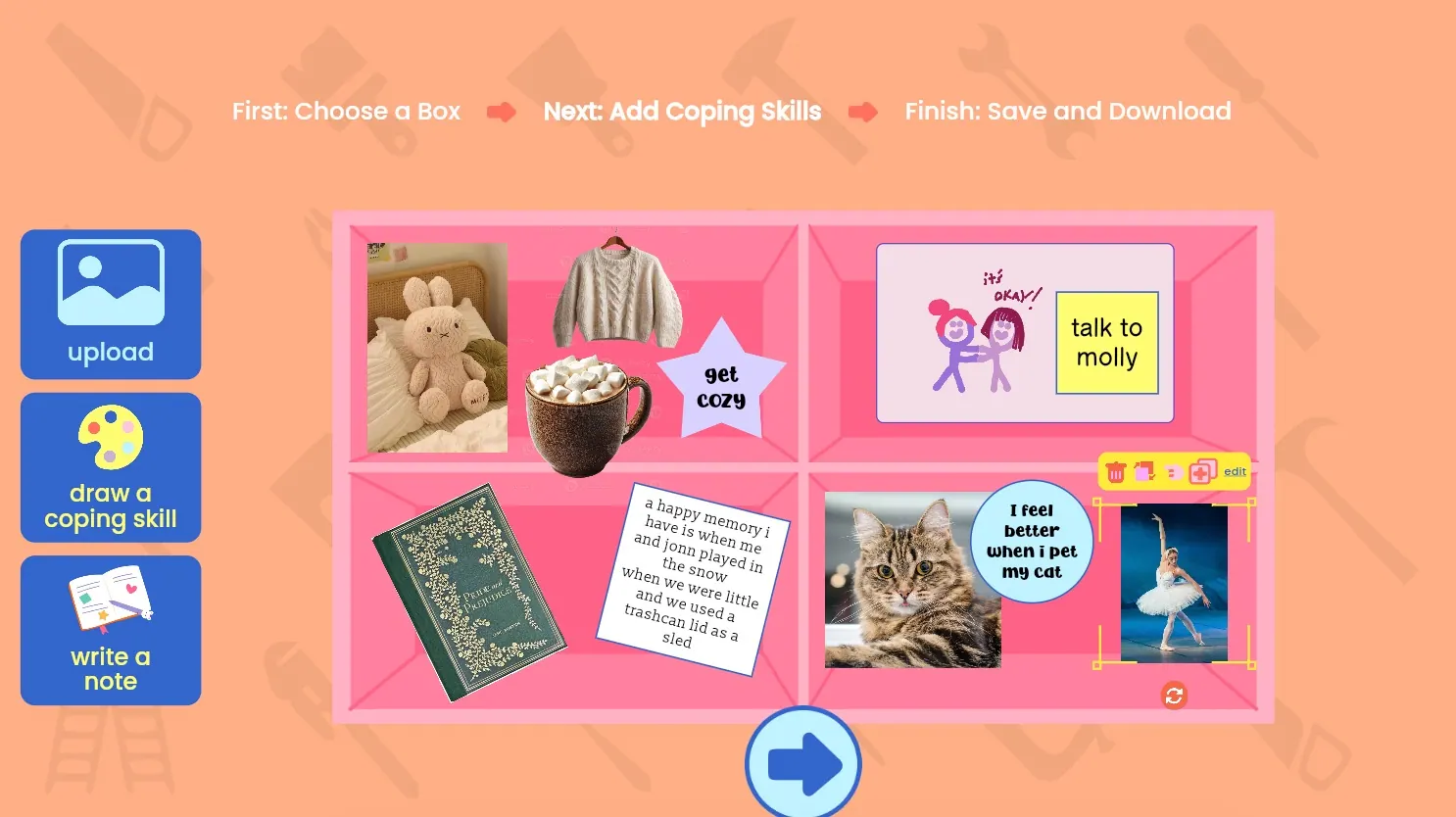
Everyone needs a few go-to tools for tough moments. In Coping Skills Toolbox, kids and teens build their own virtual toolboxes filled with coping skills, using photos, drawings, and notes. Each toolbox can focus on a theme or feeling, like "When I Feel Worried" or "Calm Down Tools," so the right skills are easy to find when they're needed most.
Step 1: Create a new toolbox
Tap the + sign to start a new toolbox.
Step 2: Make it your own
Choose a box style and a color, then give your toolbox a name. Try naming it after a feeling or situation, like "When I Feel Angry" or "Before a Big Test."
When you're ready, tap the next arrow. Your toolbox is saved as soon as it has a name, so you can always come back to it.
Step 3: Add coping skills
Now it's time to fill your toolbox! There are three ways to add a coping skill:
- Add a photo: Upload an image from your device, like a favorite pet, a calming place, or a song cover, and add a caption.
- Draw it: Use markers, pencils, and colors to draw a coping skill, then add a caption.
- Write a note: Choose a font and write out a coping skill, a reminder, or a kind message to yourself.
Step 4: Arrange your toolbox
Move things around until your toolbox feels just right. You can make items bigger or smaller, rotate them, or delete anything you don't want to keep. Everything you add saves automatically.
Step 5: Finish your toolbox
When you're done adding skills, tap the forward arrow. From here you can:
- Download your toolbox to keep or print.
- Go back to the main menu to create or open another toolbox.
- Explore your toolbox by tapping on any item inside.
Step 6: Look through your skills
Tap any item in your toolbox to see it up close. Then scroll to flip through every skill in the box, one after another. It's a great way to review your tools when you need them.
Step 7: Come back anytime
Your toolboxes stay saved and editable, so you can add new skills, update old ones, or build a brand-new toolbox for a different feeling.
Tips for using Coping Skills Toolbox in session
- Start with what already works. Ask, "What's something that helps you feel better, even a little?" Many clients already have coping skills they haven't named yet.
- Mix it up. Encourage a variety of skills, like something to do with their body, something creative, and someone to talk to.
- Build one box per feeling. Separate toolboxes for worry, anger, or sadness make it easier to grab the right tool in the moment.
- Practice the skills too. Try one skill from the toolbox together during the session so it feels familiar when it's needed.
- Revisit and update. Open the toolbox in later sessions to add new skills or talk about which ones have been helping.